
Pool Covers: Types, Prices, and How to Choose the Right One
A pool cover is one of the smartest investments you can make for your garden. The right pool enclosure protects the water from dirt, significantly reduces heat loss, and extends the swimming season by several months. It also increases safety for children and pets while reducing maintenance costs to a minimum.
In this article, you will find an overview of all types of pool covers, estimated prices, and a practical guide to help you choose a solution tailored precisely to your pool and outdoor space.
Why a pool cover is worth it
Leaves, insects, dust, pollen, and plant debris—without a pool cover, all of these settle on the pool’s surface every day. A pool cover acts as a physical barrier that traps this debris before it enters the water. The result is significantly less cleaning work, lower chemical consumption, and cleaner water with almost no extra effort. The pool is always ready for swimming—no more morning surprises in the form of green water after a storm.
Protection from dirt and weather
Leaves, insects, dust, pollen, and plant debris all settle on the water surface daily without protection. A pool cover acts as a physical barrier that stops these impurities before they reach the water. The result is significantly less cleaning, lower chemical usage, and cleaner water with minimal effort. Your pool is always ready to use without unpleasant surprises after a storm.
Heat retention and lower costs
The water in an uncovered pool cools down dramatically fast at night—temperature drops can reach as much as 4–8 °C per night during colder periods. A pool cover acts as thermal insulation: it maintains the water temperature, reduces heating costs, and shortens the time it takes for a heat pump or solar heating system to maintain the desired temperature. Over the long term, this translates to hundreds of euros in savings per year.
Safety for children and pets
An open pool presents a serious safety risk for small children and pets. A solid pool enclosure can support a certain load and prevents accidental access to the water. Some systems also include locking mechanisms that further increase safety. This provides peace of mind, even when children are playing in the garden.
Extending the swimming season
Without a pool cover, the swimming season in Slovakia is generally limited to July and August. With a high-quality pool cover, you can swim from April to October—or year-round when combined with pool heating. A pool enclosure creates more favorable microclimatic conditions around the pool, protects against the wind, and allows for pleasant swimming even in less-than-ideal weather.
Types of pool covers
The market offers several basic categories of pool enclosures, which differ in terms of structure height, operation, and level of protection. Understanding the different types of pool enclosures is key to making the right choice.
Low pool enclosure
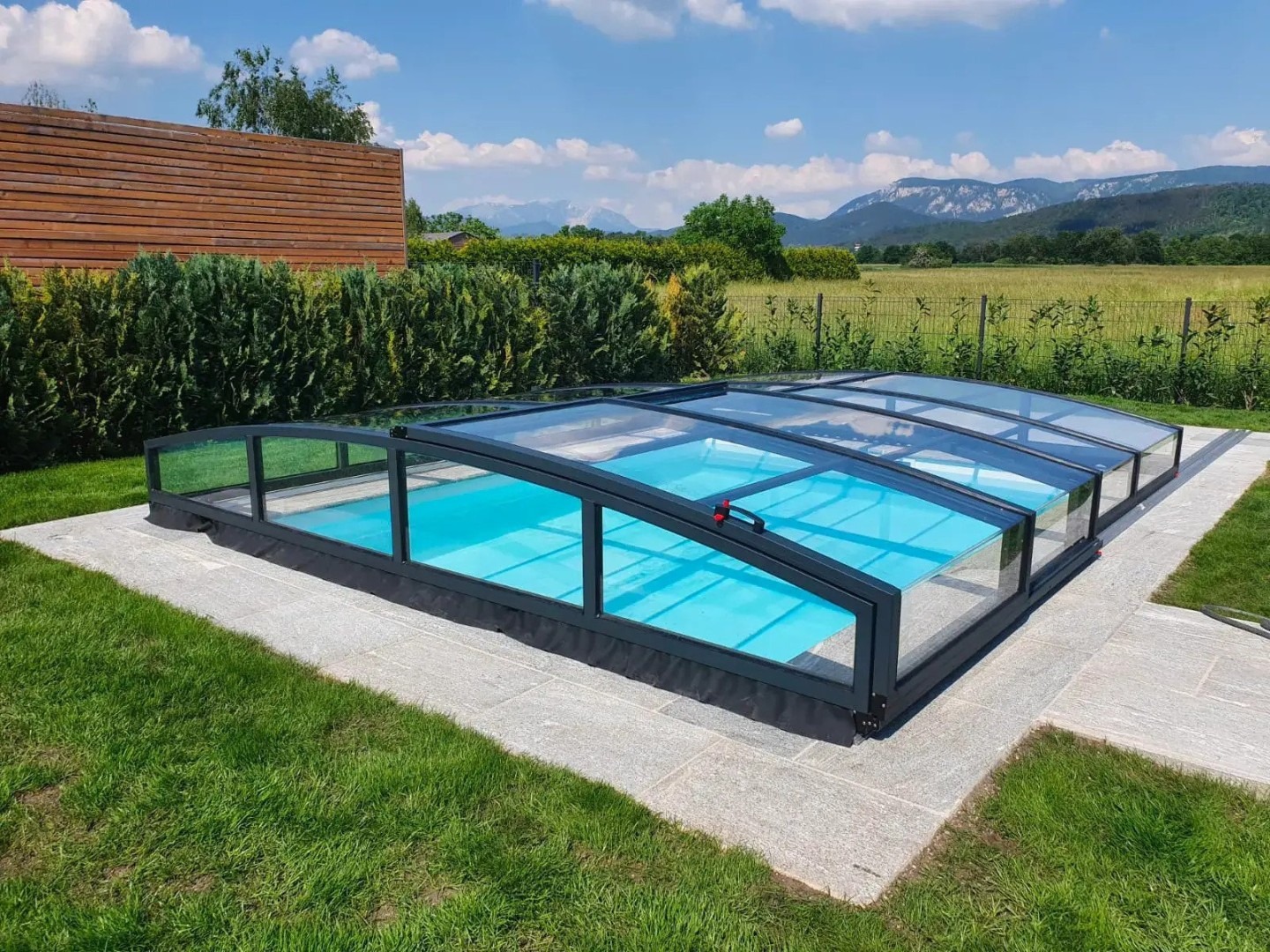
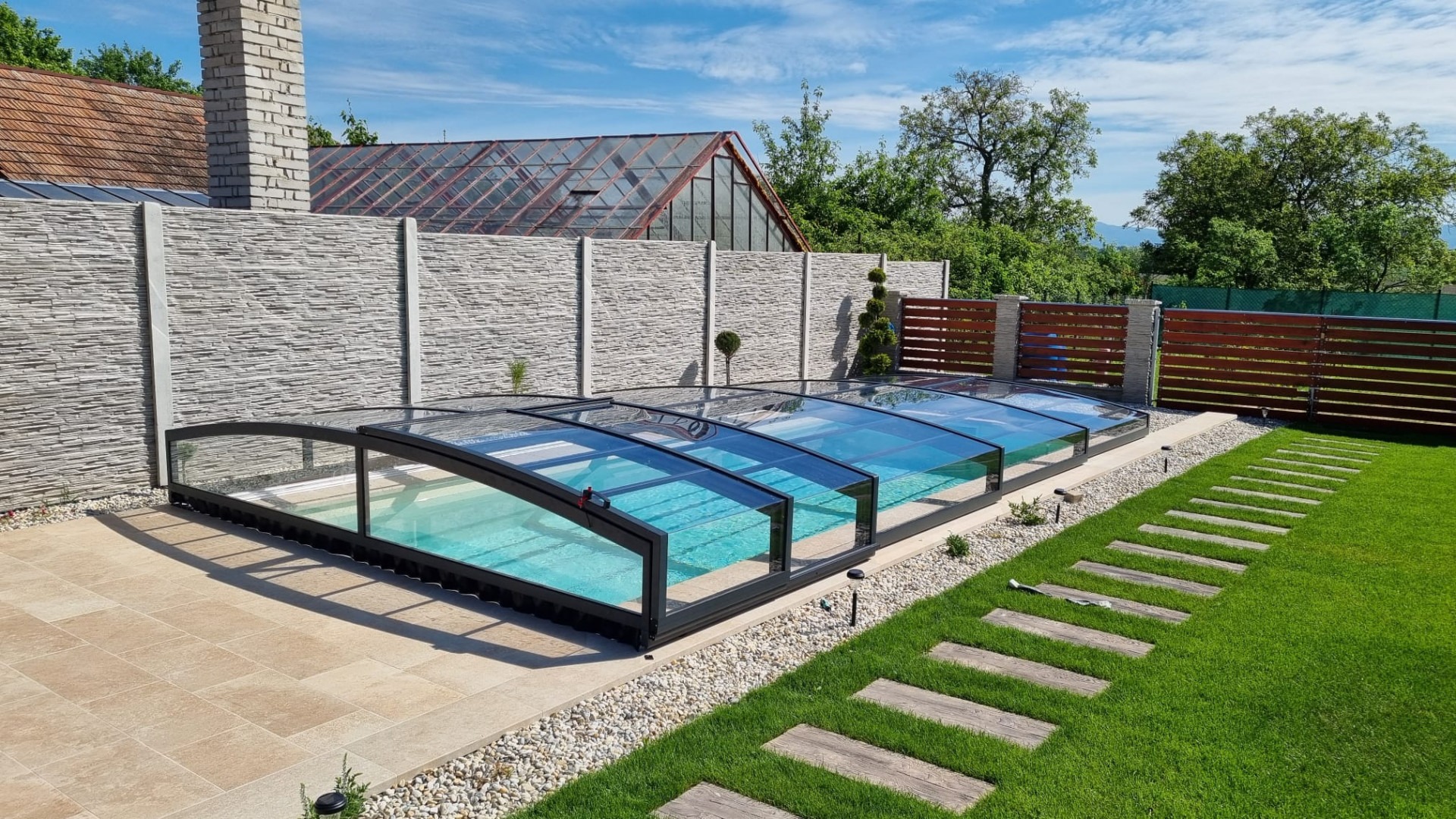
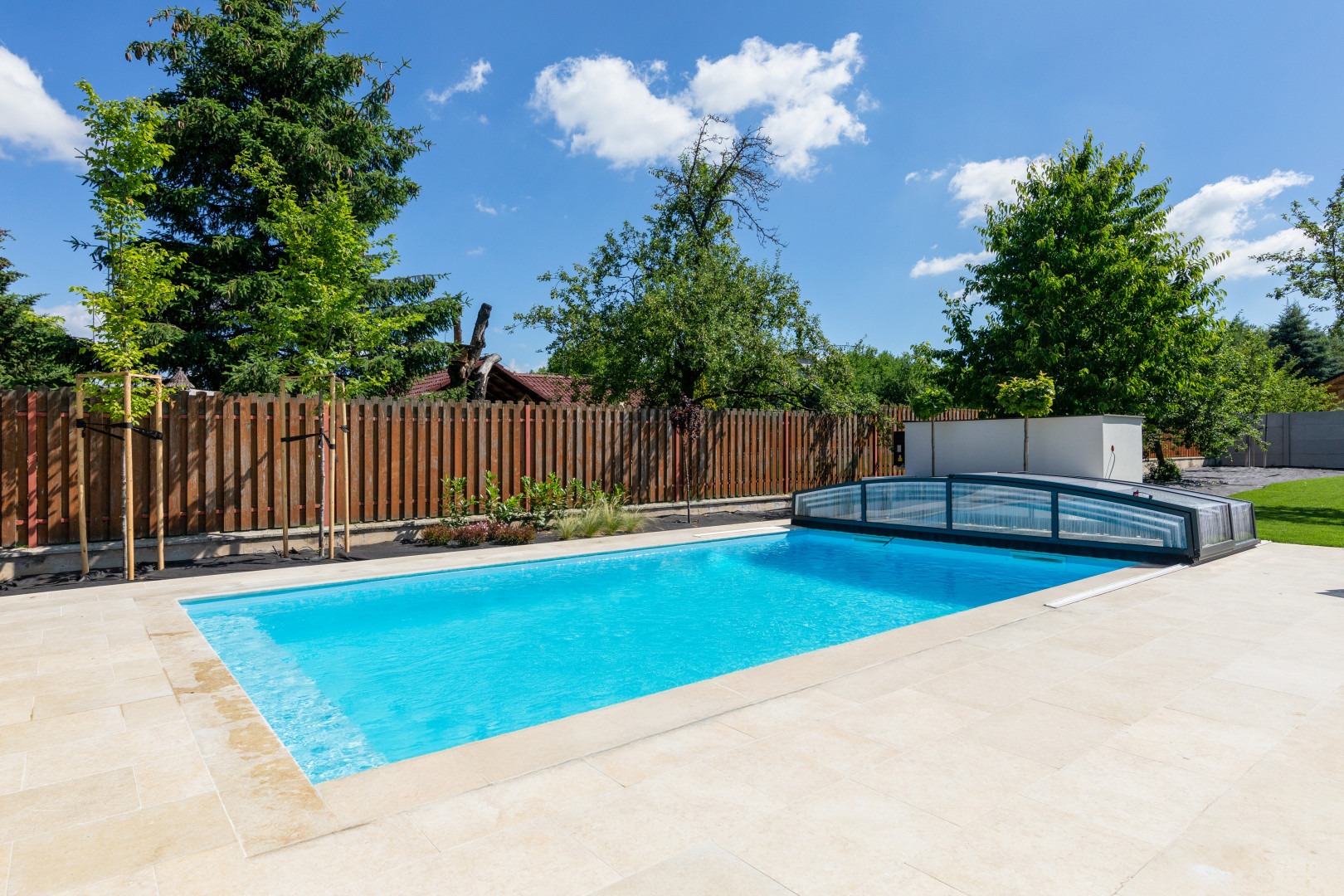
A low pool enclosure sits close to the water surface, typically 30 to 80 cm above the pool edge. It is the most popular option in many gardens because it minimally impacts the surrounding space, preserves the view, and blends naturally into the environment. When closed, it becomes almost invisible.
Who it is suitable for
A low enclosure is ideal for smaller gardens where space is limited. It is also preferred by homeowners who prioritize aesthetics, as it does not disrupt the visual harmony of the space. It is a great choice when the main goal is to protect the water and reduce heat loss, rather than create a usable space under the enclosure.
High pool enclosure
A high pool enclosure reaches a height of 2 meters or more, allowing free movement underneath. It essentially creates a covered outdoor swimming area where you can walk, place furniture, or create a relaxation zone. It also becomes a strong architectural feature in the garden.
Advantages of high enclosures
The main advantage is full comfort regardless of weather conditions. The space under the enclosure can be used for movement, relaxation, or even light activities. During rain or colder days, the area remains dry and comfortable. Although the initial investment is higher, the extended usability of the pool justifies the cost.
Sliding pool enclosure
A sliding pool enclosure offers flexibility and convenience. Individual sections move smoothly, allowing the pool to be fully or partially opened within seconds. On sunny days, you can swim under the open sky, while in the evening or during rain, you simply close the structure. This system is available in both low and high versions.
Track based vs track free systems
Traditional enclosures move along metal tracks installed next to the pool. These systems are durable, more affordable, and suitable for standard pool shapes. Track free systems represent a modern solution, where segments move on special sliding pads without visible rails. This results in a cleaner design, easier maintenance, and a more minimalistic look, although at a higher cost.
How to choose a pool cover
Choosing the right pool enclosure depends on several key factors. Answering the following questions will help you narrow down your options and find a solution that will last for years without compromise.
Pool size and shape
The pool enclosure must be custom-made to fit your pool exactly—there are no standard sizes. Before ordering, it is therefore essential to measure the length, width, and shape of the pool, including any protrusions, steps, or rounded corners. For irregularly shaped pools (L-shape, octagon, organic shape), the enclosure must be custom-made, which also affects the price and delivery time.
Enclosure height
The decision between a low and a high enclosure depends primarily on the size of your garden and how much you want to move around inside the enclosed area. If you have a smaller property or prefer a discreet solution, a low enclosure is the right choice. If you want to use the pool as a true indoor swimming facility—in any weather and year-round—opt for a high roof. Also consider surrounding trees, fencing, and the slope of the terrain, which can complicate installation.
Infill material
In everyday use, what matters is how easily you can open and close the pool enclosure. A manual sliding system is affordable and reliable—it takes just a few seconds to open the pool. A motorized drive with remote control or smart control via an app adds a level of convenience you’ll appreciate, especially with larger structures. When making your choice, also consider how often you’ll use it: if you open the pool several times a day, the investment in a motorized drive will quickly pay off in convenience.
Structure and sliding system
In everyday use, what matters is how easily you can open and close the pool enclosure. A manual sliding system is affordable and reliable—it takes just a few seconds to open the pool. A motorized drive with remote control or smart control via an app adds a level of convenience you’ll appreciate, especially with larger structures. When making your choice, also consider how often you’ll use it: if you open the pool several times a day, the investment in a motorized drive will quickly pay off in convenience.
How much does a pool cover cost
The price depends on multiple factors including size, type, materials, and installation conditions. The following overview provides a realistic estimate.
| Type of Pool Enclosure | Estimated Price | Note |
|---|---|---|
| Low enclosure | from €2,500 to €6,000 | Depends on material and system |
| High enclosure | from €6,000 to €18,000 | Larger structure, higher comfort |
| Sliding enclosure (low) | from €3,500 to €8,000 | Flexible opening |
| Sliding enclosure (high) | from €9,000 to €25,000 | Premium solution |
| Track-free system | +10–20% surcharge | Cleaner, minimalist design |
What affects the price
Several factors influence the final cost:
- Pool size and shape
- Material selection
- Type of sliding system
- Level of customization
- Installation conditions
- Supplier quality and warranty
Long term savings
A pool enclosure typically pays for itself within 3 to 5 years. The savings come from several sources: lower energy consumption for water heating (20–40% annually), reduced use of pool chemicals due to cleaner water, lower maintenance and cleaning costs, and an extended lifespan of the pool itself. If you are considering a pool enclosure as an investment, it is important to factor these savings into your overall calculation.
Common mistakes when choosing a pool cover
Choosing based only on price is the most common mistake. Low quality materials and poor construction lead to higher costs over time. Another mistake is selecting the wrong height or ignoring the available space around the pool. Always consider how the enclosure will function in real conditions, not just how it looks.
Choosing Based Solely on Price
Cheaper roofing may seem like a good deal at first glance, but in practice it will cause problems: thinner polycarbonate turns yellow and cracks after a few seasons, low-quality profiles corrode or warp, and a poorly designed sliding system may jam or fall off the tracks over time. A pool enclosure is a long-term investment—choose a proven manufacturer with a good warranty over an extremely low price.
Incorrect enclosure height
Many customers choose a low enclosure because it’s cheaper, but later find they lack the space to move around when the pool is open. The opposite also happens: someone orders a high enclosure without considering enough space for it to open fully (sliding sections need free space behind the pool). Before ordering, always visualize how the enclosure will look and function in the actual space.
Ignoring the space in the garden
A pool enclosure requires not only the correct dimensions but also sufficient clearance around it. The sliding sections must slide somewhere, usually behind the pool or to the side. If there are trees, a fence, a patio, or other objects in this area, the sections have nowhere to go and the enclosure cannot be fully opened. Therefore, before purchasing, always measure not only the pool but also the surrounding area; at least 80–120 cm of free space behind the pool is essential.
Pool cover vs tarp: what is the difference
Pool covers and permanent pool enclosures seem to serve the same purpose—protecting the water. In reality, however, they are fundamentally different solutions that offer varying levels of comfort, safety, and cost-effectiveness.
Advantages of a solid enclosure
- Year round usability
- Higher safety
- Better heat retention
- Minimal maintenance
- Long lifespan
When a tarp is enough
A pool cover is a sensible solution if you’re looking for a temporary or budget-friendly way to protect your pool during the off-season. It’s suitable for winterizing your pool, providing short-term protection while you’re away, or as a first step before investing in a permanent enclosure. Keep in mind, however, that a pool cover does not provide safety protection, and operating it manually is significantly less convenient.
FAQ: pool cover
How much does a pool cover cost
The price of a pool enclosure ranges from €2,500 for a simple low-profile enclosure to €25,000 or more for premium high-profile sliding systems. The most commonly purchased category—a low-profile sliding enclosure for an 8 × 4 m pool—costs approximately €3,500–6,000, including installation. The exact price depends on the pool’s dimensions, materials, sliding system, and choice of contractor.
What is the best pool cover
There is no single, universally best solution—it depends on your priorities. If you want a discreet solution for a smaller garden with the primary goal of protecting the water and conserving heat, the best choice is a low-profile sliding roof with polycarbonate panels. If you want year-round swimming with full comfort and freedom of movement under the enclosure, opt for a high sliding enclosure. In any case, it’s better to invest in a higher-quality enclosure from a trusted manufacturer with a long warranty.
Is a pool enclosure worth it
Yes, a pool enclosure is worth the investment. Measurable savings on water heating, chemicals, and maintenance amount to hundreds of euros per year. The investment typically pays for itself within 3–5 years, and a high-quality pool enclosure has a lifespan of 15–25 years. On top of that, there are intangible benefits: a longer swimming season, safety, comfort, and an increase in property value.
What is the difference between low and high enclosures
A low roof (30–80 cm above the pool edge) protects the water, conserves heat, and is less visible in the garden—but you cannot move around underneath it. A high roof (2 m and higher) creates a fully enclosed space where you can stand, walk, and relax, but it takes up more space and is significantly more expensive. The basic rule: low for protection and savings, high for comfort and year-round use.
Conclusion: a pool cover as a long term investment
A pool cover is not a luxury, but a practical solution that saves money, extends the swimming season, improves safety, and enhances comfort. The key is choosing the right solution based on your space, needs, and lifestyle.
If you are unsure which option is right for your pool, the team at Montalu.sk will be happy to help. Contact us for a consultation or request a custom quote tailored to your project.
Frequently Asked Questions
What is important to know about “How to Choose a Pool Cover”?
A pool enclosure significantly improves water clarity, reduces heat loss, and enhances comfort during daily use. Find out what types of enclosures are available, what factors influence their price, and how to choose a custom solution for your garden.
What key information does the article provide about “How to Choose a Pool Cover”?
A pool enclosure significantly improves water clarity, reduces heat loss, and enhances comfort during daily use. Find out what types of enclosures are available, what factors influence their price, and how to choose a custom solution for your garden.


