
The right pergola shading decides whether your terrace stays pleasant all day or turns into an overheated space in summer. We compared awnings, screen blinds, external venetian blinds and shade sails so you can pick a solution that suits your terrace orientation, your budget and the comfort you expect.
Pergola shading has to match the orientation of the terrace
There is no universal shading solution for a pergola. A south-facing terrace, where the sun comes mainly from above, needs something different from a west-facing terrace, where the low afternoon sun cuts in from the side.
So it is not enough to deal only with the pergola roof. What matters is where the sun comes from at different times of day, whether the terrace is exposed to wind, and whether you want the shading to lower the temperature, reduce glare or give you more privacy.
Well-planned external shading stops solar radiation before it starts heating the glazed surface. On glazed pergolas and conservatories, its position therefore matters just as much as the choice of system.
When you need roof shading
Roof shading matters most on pergolas with a glass or polycarbonate roof. A transparent covering lets in daylight and keeps out rain, but on hot days it can increase the heat load in the space.
An awning fitted above or below the roof infill lets you adjust the amount of light to the weather. When you do not need it, you simply retract it.
When side shading helps
Side shading mainly deals with low morning or afternoon sun. At the same time it can protect the space from wind, from neighbours' views and, in part, from driving rain.
The usual options are screen blinds, side awnings, glazing or external venetian blinds. The choice depends on whether you want to keep the view of the garden or close the terrace off visually.
An awning gives you flexible shading from above
An awning is one of the most practical solutions, because it shades a large area without permanently shutting out daylight. It works on stand-alone terraces and as shading for a pergola with a glazed roof.
When choosing, look above all at the size of the area to be shaded, the fabric guidance, the protection of the mechanism, wind resistance and the control options. On larger spans, the counter-tension system matters, because it keeps the fabric taut even when extended.
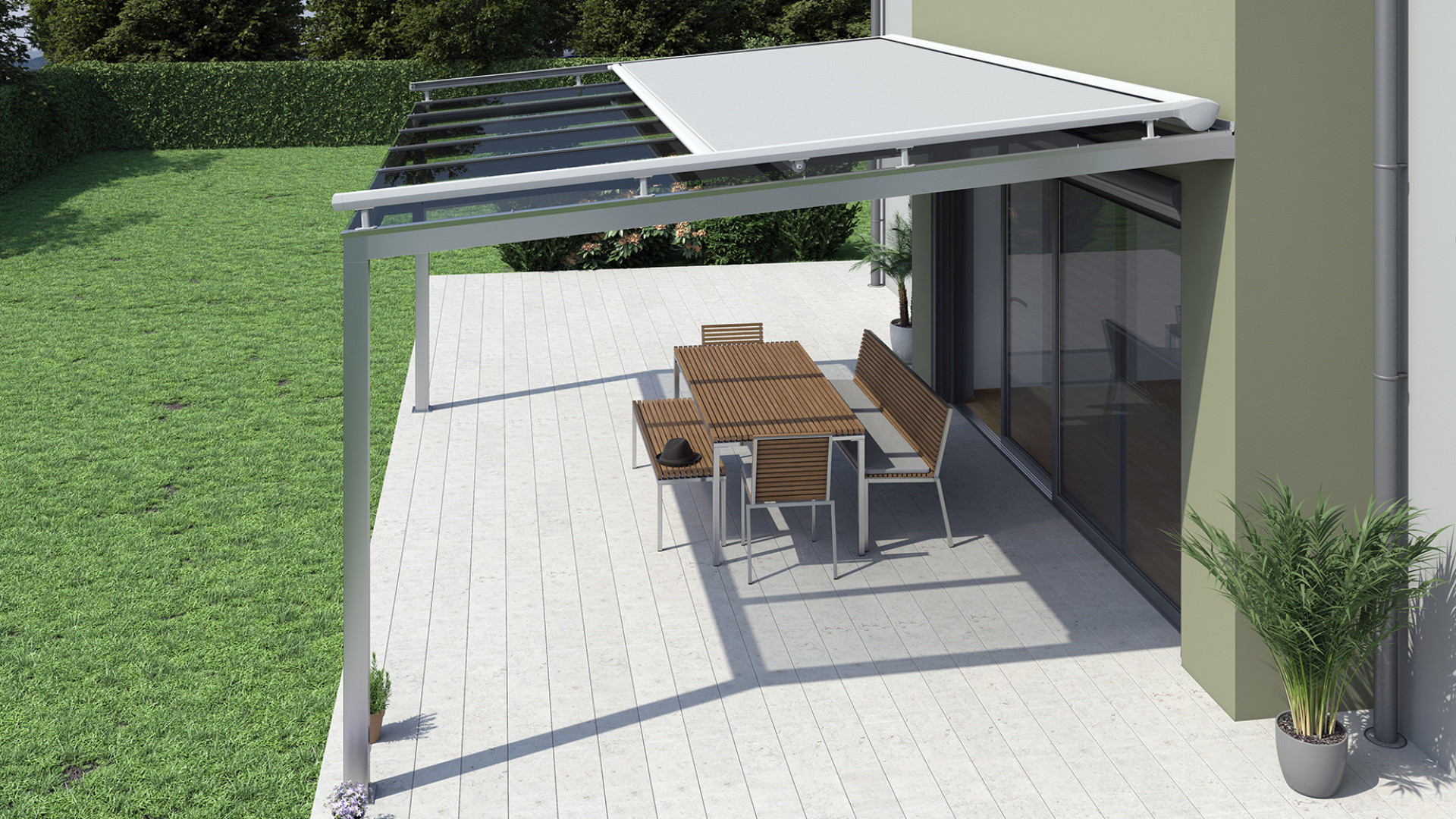
Overhead awning above a glazed roof
An overhead awning is fitted above the glazed surface. It stops solar radiation before it reaches the glass, which makes it the better choice wherever protection against overheating comes first.
Such a solution is exposed to rain, wind and dirt, so it has to be designed for outdoor use. A solid structure, stable guidance and full retraction of the fabric are what count.
In the MontAlu range, the XLINE awning is made for this. It is an overhead awning with counter-tension, intended for conservatories and large glazed areas, and it can also be mounted vertically.
Lower awning under the glass
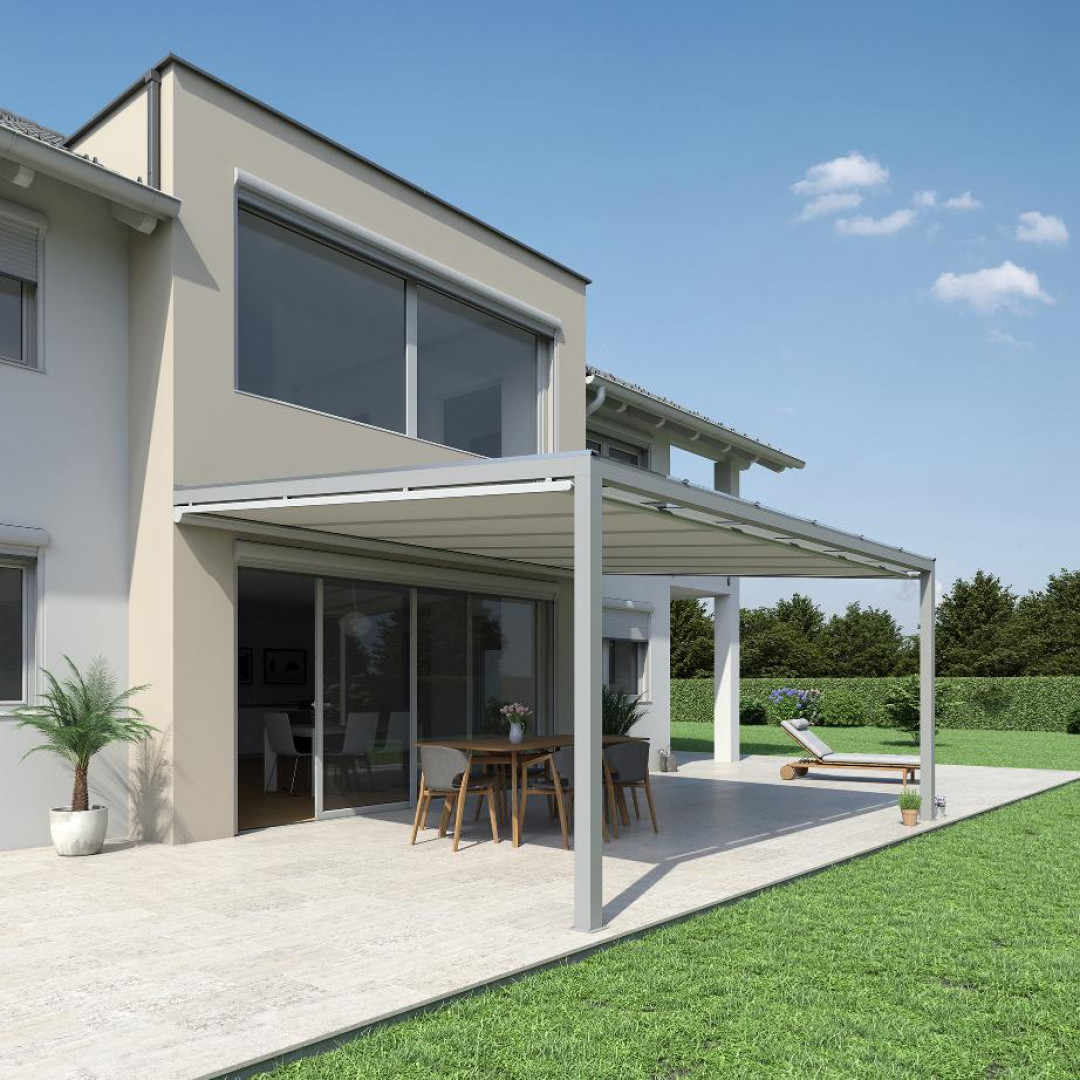
A lower awning is fitted on the inside of the pergola, directly beneath the glazed roof. The structure and the fabric are therefore protected from rain, leaves and other outdoor exposure.
The advantage is longer material life and easier maintenance. Because solar radiation passes through the glass first, however, it does not limit overheating as effectively as shading placed above the glazing during strong summer sun.
For pergolas with a glass roof, for skylights and for conservatories, MontAlu offers the XLIGHT awning, a lower awning with counter-tension designed for installation under glass. It is protected by the glazing and the fabric stays taut.
When an awning is the best choice
An awning for terrace shading works well when you:
- need to shade a large roof area,
- want to adjust the light to the weather,
- do not want to darken the pergola permanently,
- have a glazed or polycarbonate roof,
- prefer electric operation and the option to automate.
An awning is not a substitute for a fixed roof. The fabric protects against moderate sun and, depending on the model, light rain, but it has to be retracted in bad weather.
Screen blinds protect the terrace from sun and from prying eyes
Screen blinds are fitted mainly on the sides of the pergola. The specialised technical fabric limits how much sunlight gets through while still leaving part of the view outwards.
They work best on west and south-west facing sides. That is where low afternoon sun tends to be more of a nuisance than radiation coming from above.
The advantages of screen blinds
Good terrace blinds do several jobs at once:
- they reduce glare,
- they increase privacy,
- they take the edge off the wind,
- they close the pergola off visually,
- they protect furniture from direct UV radiation,
- they look lighter than a solid wall.
Side guidance of the fabric is the thing to check. Systems running in rigid guide rails are more stable and the fabric moves less in wind. Even so, every blind has defined limits of use and has to be retracted in strong wind.
A cassette blind protects the fabric once retracted
In a cassette system the whole fabric rolls into a protective housing. When the blind is not in use, the material is not needlessly exposed to rain, dust or sunlight.
For vertical shading MontAlu offers the ZIPLINE roller blind, which retracts completely into a protective cassette. It suits side shading on a pergola, a terrace or a glazed conservatory.
Screen blinds also make sense if you plan to glaze the terrace later. Ideally, though, allow for the cassette, the guide rails and the power supply while the pergola is still being designed.

External venetian blinds let you fine-tune the light
External venetian blinds work with tilting louvres. That way you control not only how much light comes in, but also its direction. The louvres can be set to cut direct glare while still letting diffused daylight through.
They are used most often in front of windows and vertical glazed surfaces. On a pergola or conservatory they make sense above all where the structure has fixed side glazing.
Pros and cons of louvre shading
Louvre shading gives you very precise control over light and sits well with contemporary architecture. Aluminium louvres also look more substantial than a fabric blind.
The downside is a bulkier structure, more weight and more space needed for installation. On an open pergola exposed to strong wind, venetian blinds are not always the most practical answer.
They are worth choosing above all in combination with glazing. For ordinary side shading on an open terrace, screen blinds are simpler and visually lighter.
A shade sail is simple, low-cost terrace shading
A shade sail is an affordable way to create shade without installing a complex mechanism. It suits open terraces, garden seating areas or spaces you only use during the main summer season.
Sails come in a range of shapes, sizes and colours. Tensioned properly, they can look modern and unobtrusive. How well they work, though, depends heavily on where the anchor points sit and which way the sun comes from.
What to watch out for when fitting a sail
The sail has to be tensioned enough and set at a slope so that water does not pool on it. The anchoring has to cope with the high forces that build up in wind.
Not every shade sail is waterproof. Ordinary breathable fabric gives shade but will not keep rain off the terrace. A waterproof sail, in turn, needs a precisely planned slope and stronger anchoring.
Low-cost terrace shading can work as a temporary solution, but for everyday use expect manual handling, seasonal storage and gradual wear of the fabric.
When a shade sail makes sense
A shade sail works well when you:
- are looking for simple seasonal shading,
- do not want to interfere with the structure of the house,
- need to shade an irregular space,
- have a terrace that is not badly exposed to wind,
- need neither automatic control nor rain protection.
On a new aluminium pergola, a sail is usually more of a stopgap. An integrated awning or screen blinds give a cleaner result and easier day-to-day use.
Awning, screen blinds or sail: a practical comparison
Awning
Best used for: shading a pergola roof or a stand-alone terrace.
Main advantages: large shaded area, retractable, electric operation, clean integration into the pergola.
Limitations: sensitive to strong wind, higher installation demands, needs a suitable load-bearing structure.
Screen blinds
Best used for: side shading of the terrace and protection from low sun.
Main advantages: privacy, partial view, protection from glare and wind, compact retraction into the cassette.
Limitations: they do nothing about sun coming through the roof and have to be retracted in strong wind.
External venetian blinds
Best used for: vertical glazed surfaces of a conservatory or an enclosed pergola.
Main advantages: precise light control, contemporary look, tilting louvres.
Limitations: bulkier structure, higher installation demands and less suitable for fully open spaces.
Shade sail
Best used for: simple seasonal shading of a garden or an open terrace.
Main advantages: low purchase price, quick installation, flexible shape.
Limitations: less comfort, no automation, limited weather protection and a need for correct tensioning.
How to choose pergola shading in five steps
1. Work out where the sun comes from
Watch the terrace in the morning, at midday and in the afternoon. A south-facing aspect usually calls for good shading from above, while a west-facing one also makes side shading necessary.
Bear in mind, too, that the position of the sun changes through the year. A fixed overhang that works in July will not necessarily solve low sun in spring and autumn.
2. Decide what the shading has to solve
Protection against overheating and creating privacy call for different systems. A roof awning limits sun coming from above, while screen blinds help mainly on the sides of the pergola.
If the space also has to be protected from wind and rain, fabric alone may not be enough. In that case, consider combining shading with terrace glazing.
3. Take wind conditions into account
A pergola on an open plot needs a more robust solution than a terrace sheltered by surrounding buildings. Wind acts on extended fabric the way it acts on a sail, so neither the strength of the anchoring nor the limits of the particular system can be ignored.
With electric shading, a wind sensor is a useful addition: it retracts the awning or blind automatically.
4. Plan the shading together with the pergola
The cleanest result comes when shading is dealt with while the structure is still being designed. The manufacturer can leave room for the cassettes, the guidance, the cabling, the motor and the control connection.
Retrofitting is often possible, but it can be more demanding technically and some components will stay visible. When planning a new terrace, it is therefore worth looking at the options for made-to-measure aluminium pergolas.
5. Decide between manual and electric operation
Manual operation is simpler and more affordable. It suits smaller awnings and blinds that you do not use every day.
On large spans, an electric drive is more convenient. You can control the shading with a switch, a remote, or link it to sensors and a smart home system.
Conservatory shading also has to deal with overheating
Shading a conservatory affects the internal temperature more than shading a fully open terrace. A glazed space can take in a large amount of heat over a sunny day, and without ventilation and shading that heat gradually builds up.
The most effective answer usually combines roof shading, side screen blinds and the option of intensive ventilation. In a conservatory used all year round, air conditioning or controlled ventilation may also be needed.
At the design stage it is important to distinguish between an overhead and a lower awning. An overhead awning stops solar radiation before the glazing. A lower awning is better protected from the weather, but some of the heat has already passed through the glass roof.
The most common mistakes in terrace shading
Solving only one side
A roof awning will not necessarily help against low western sun. Side blinds, in turn, do nothing about an overheating glazed roof. On badly exposed terraces, a combination of both systems is often the best answer.
Choosing on price without allowing for wind
The cheapest solution is not necessarily right for an open, windy plot. Poor anchoring or too large a fabric area can damage both the shading and the surrounding structure.
No power supply prepared
When an electric awning is wired in later, cables or surface trunking can stay visible. The power supply, the switches and the position of the sensors are best sorted out before the facade and the terrace are finished.
Fabric that is too dark or too dense
Completely opaque fabric creates deep shade but can make the terrace feel smaller. Screen fabric with a suitable openness factor lets more light through and keeps a partial view of the garden.
Ignoring water run-off
Neither an awning nor a shade sail should create a point where water collects. The design has to respect the minimum slope, correct fabric tension and the manufacturer's recommendations.
Which pergola shading is best?
The best solution depends on the structure of the pergola and how you use the terrace.
For a glazed roof, an overhead or lower awning is the right fit. On the west side of the pergola, screen blinds are practical. In an enclosed conservatory you can also consider external venetian blinds. A shade sail is enough mainly for seasonal use and a smaller budget.
The highest comfort usually comes from combining roof and side shading. That way you can adapt the terrace to the position of the sun, to wind and to the weather of the day, without closing it off for good.
MontAlu supplies shading for pergolas, terraces and conservatories, including overhead awnings, lower awnings and cassette blinds. You can browse the available options in the pergola shades category or put together an indicative design in the configurator.
Frequently Asked Questions
Which pergola shading is best?
The best solution depends on the structure of the pergola and how you use the terrace.
What key information does the article provide about “Pergola and Terrace Shading: Awning, Screen Blinds or Shade Sail?”?
The right pergola shading decides whether your terrace stays pleasant all day or turns into an overheated space in summer. We compared awnings, screen blinds, external venetian blinds and shade sails so you can pick a solution that suits your terrace orientation, your budget and the comfort you expect.


