A Quick Decision Based on Your Property
The most important factors are whether your property is flat or sloped, has a clean paved surface or gravel, and how much space you have alongside the fence to slide the gate open. If you have challenging terrain or harsh winters, a solution that is less sensitive to dirt and water is the best choice.
When You Have Limited Space Along the Fence
If you don’t have enough side space, the gate won’t have anywhere to slide, and you’ll have to compromise on the passage width or ease of use. Sliding gates require a clear section of fence where the gate leaf slides when open, so a short fence section right next to the passage is a common limitation.
For a gate on a narrow lot, it’s worth first calculating the actual passage width and measuring the free section along the fence. Only then should you choose the type of construction and paneling, so that the gate isn’t just “nicely designed” but actually impractical.
When you have a slope or uneven terrain
If the passage is on a slope or the ground is uneven, the track is more sensitive to the quality of the ground, the gradient, and drainage. For a gate on a slope, it is essential that water does not pool in the gate track and that debris does not accumulate where the gate moves. If preparing the ground is complex or risky, a self-supporting gate is usually the more practical choice
How a Sliding Gate with a Track Works
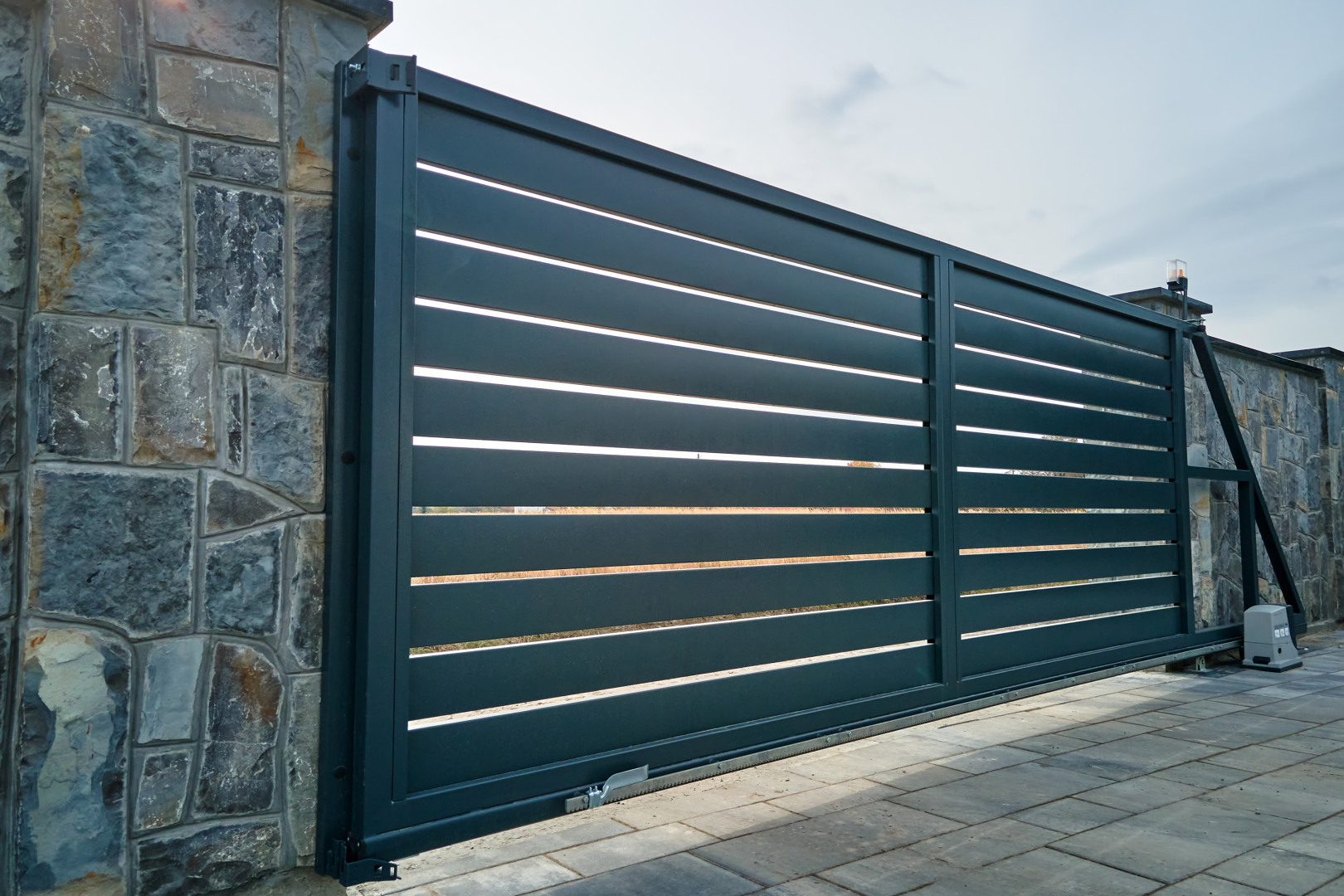
A sliding gate with a track moves along a track installed in the opening, so the quality of the foundation and the cleanliness of the track are directly linked to the gate’s reliability. On flat, clean, paved surfaces, this is a proven solution, often offering a favorable price-to-performance ratio. However, if the track bends, sags, or becomes clogged, the gate will start to scrape, become noisy, and the automatic mechanism will operate with increased resistance.
Space requirements and what you need next to the passage
Sliding gates require a sufficient section of fence next to the passage to allow the gate leaf to slide. If there is a corner, a gate, a post, or a short section of fence right next to the gate, it may be difficult to open the gate fully.
At the same time, keep in mind that the track is in the passageway, so the surface must be stable, level, and properly installed. With an automatic sliding gate, any unevenness or debris will be even more noticeable because the system is more sensitive to resistance.
Terrain and surfaces that a sliding gate cannot handle
Gravel, mud, leaves, and—in winter—snow and ice place the greatest strain on the track. Debris accumulates in the gate’s track, making it harder to operate; the gate may become noisier, and components wear out faster. If you have a gravel driveway or a frequently clogged passageway, plan for regular track maintenance. It is precisely under such conditions that a trackless gate often proves to be the better choice.
How a cantilever gate works
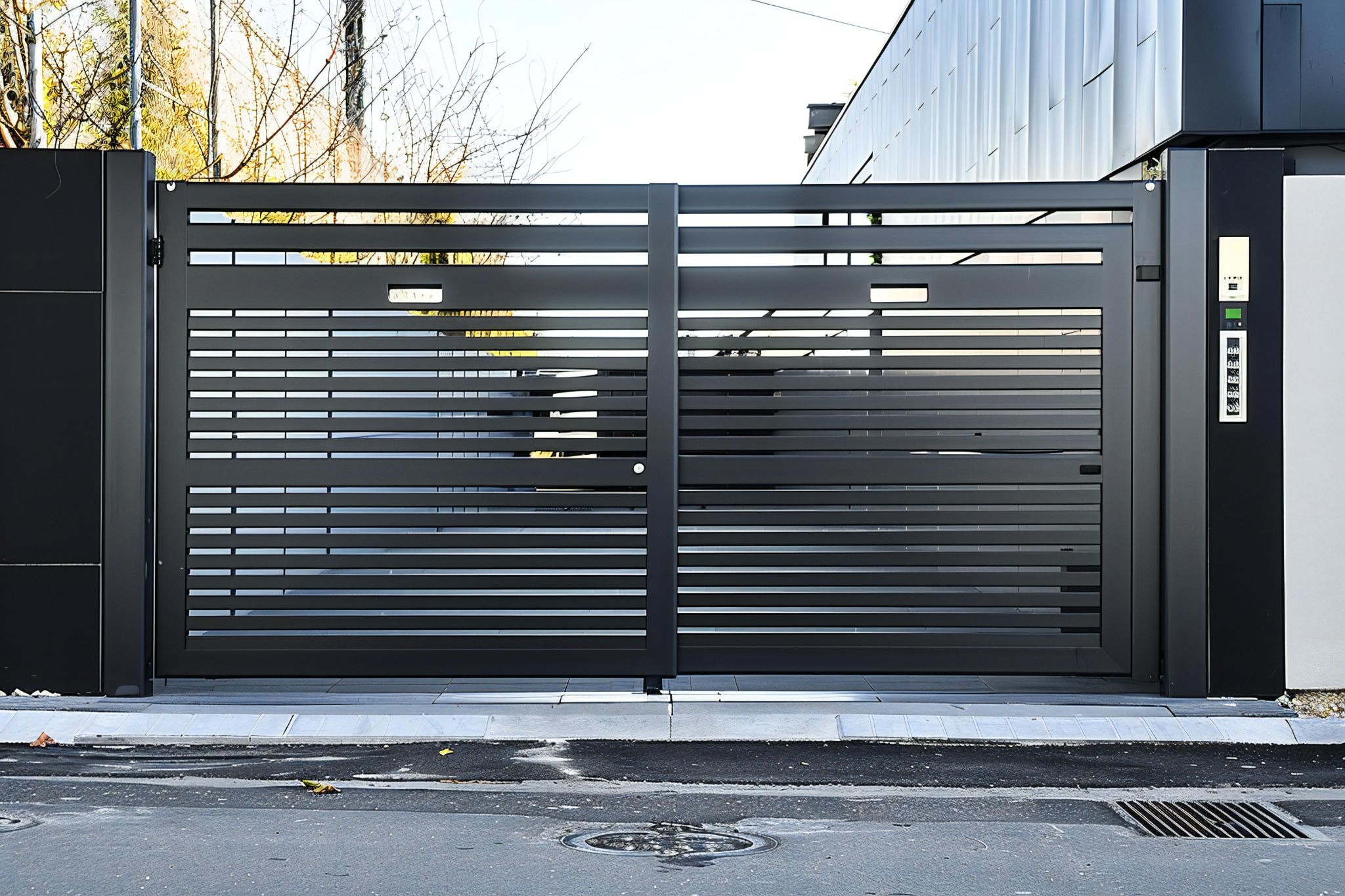
A cantilever gate (cantilever sliding gate) does not run on a track in the opening, but is supported by carriages anchored to a solid foundation next to the opening. The result is simple: the passageway remains clear, nothing is embedded in the ground along the gate’s path, and the system is less susceptible to debris and winter conditions.
When is a self-supporting gate the best choice?
A self-supporting gate is the best choice when you want reliable operation even in harsh conditions and don’t want to deal with a track in the passageway, typically when you have:
- frequent snow and frost
- gravel or a surface that shifts and gets dirty
- paving with expansion joints where you don’t want to cut a track
- the need for smooth operation with automation without sensitivity to minor debris
What are the requirements for installing a self-supporting gate and its foundation?
A self-supporting gate requires a high-quality foundation and precise anchoring of the support carriages, as the gate’s weight is transferred to one side. This can increase the demands on preparatory work, especially in cases of weak subsoil or the need for drainage. It is also important to note that a self-supporting sliding gate is typically longer due to the counterweight, so it requires more side clearance.
Space Comparison: Which Takes Up More Room?
The decisive factor is the side clearance along the fence for the gate leaf to slide, not just the width of the opening itself. Both solutions require space for sliding, but a self-supporting gate is typically longer due to the counterweight. Conversely, a sliding gate with a track may be more space-efficient, but it places greater demands on the surface in the passageway.
Model scenarios: narrow fence, short section by the gate
A short section of fence next to the gate, immediately followed by a corner or entrance: you’re limited by the swing radius; without enough space, the gate won’t open comfortably.
Narrow lot, but a long, straight section of fence along the driveway: both systems can make sense; the surface and maintenance requirements will be the deciding factors.
Long section of fence, but gravel, snow, or mud in the driveway: a self-supporting gate has the advantage, as a gate without a track is less sensitive to debris buildup.
Terrain and winter—the most common deciding factors
The most problems arise in winter and during rain, when it becomes clear whether the foundation is stable and whether drainage is properly addressed. Slope, water, and snow can turn an otherwise good solution into a gate that requires regular maintenance.
Slopes and elevation differences during passage
A gate on a slope must have the wing’s movement geometry and guidance designed so that the gate does not collide anywhere and does not work against the terrain. A track on a slope is more susceptible to water retention and silting, so without the proper gradient and a stable foundation, problems tend to recur. If the slope requires a complex track and challenging drainage, a self-supporting gate is usually a better choice.
Drainage and Water Retention in the Track
Water in the track, combined with freezing temperatures, causes freezing, increased resistance, noise, and faster wear. For a gate with a track, drainage and track cleanliness are essential requirements, not optional extras. If this is neglected, the gate will operate unpredictably precisely on the worst days.
Aluminum Gates: Design, Durability, and Maintenance
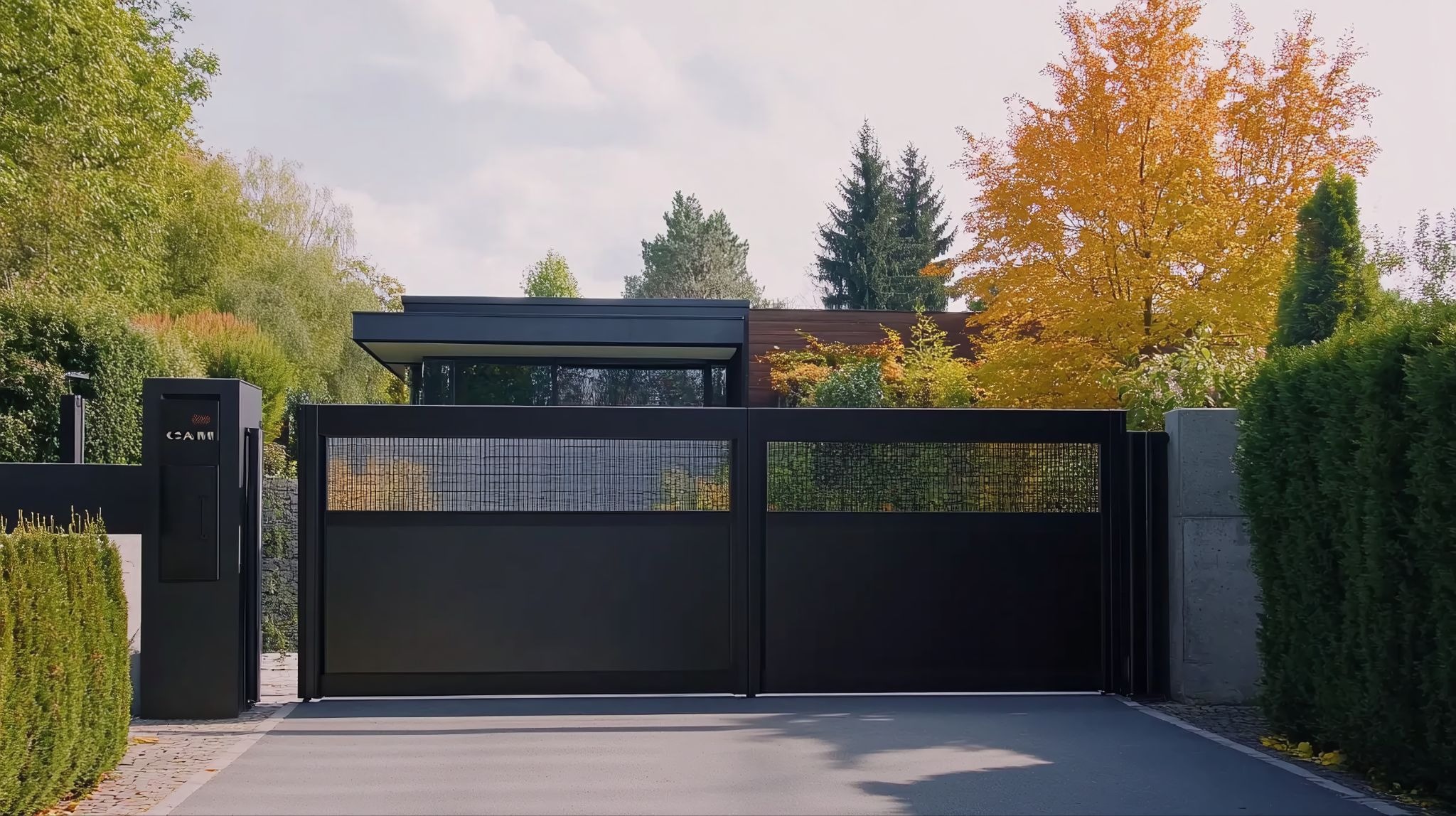
Aluminum gates are popular for their low maintenance, corrosion resistance, and modern appearance. With proper construction and surface treatment, they retain their appearance for many years, which is particularly practical for gates and fences that are visually prominent.
Filling and Privacy: Slats, Solid Panels, and Combinations
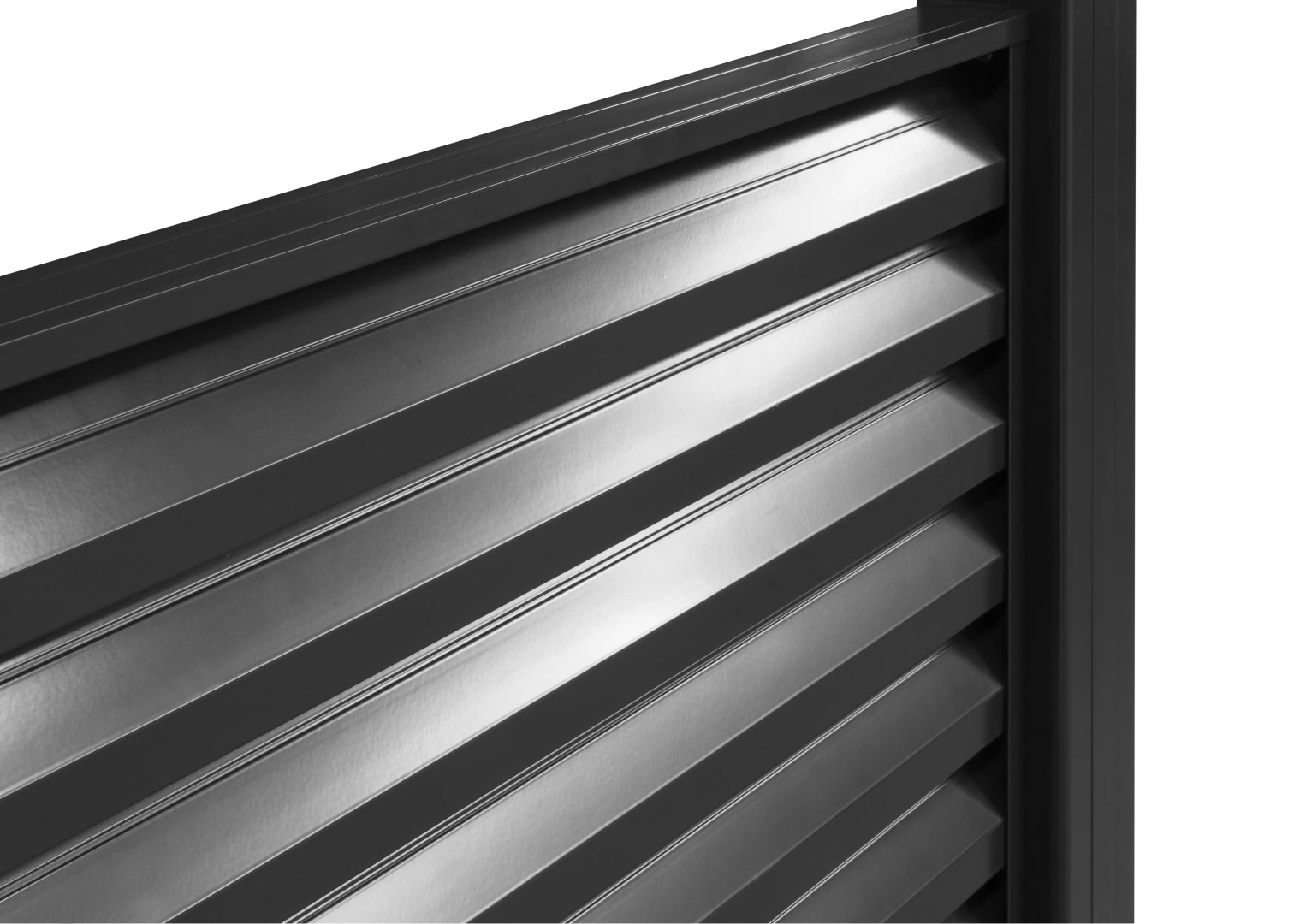
Slats, solid panels, or combinations affect not only privacy but also how the gate behaves in the wind. The more “surface area” the gate covers, the more important it is to properly size the structure and drive, especially for automatic systems. With opaque solutions, it is therefore worth addressing robustness from the outset.
Colors, surface finish, and coordination with the fence and gate
A unified system of fence, gate, and gate in the same design and finish looks the cleanest. With aluminum, long-term color stability is an advantage, so matching it with an aluminum fence and gate makes sense from a maintenance perspective as well.
Automation and comfort: what’s different between the two solutions
With automation, system resistance is the deciding factor. A gate with a track is more sensitive to resistance caused by track debris, while a self-supporting gate operates without a track and often maintains smoother operation even in harsher conditions. For both solutions, the drive must be properly sized according to weight, infill, and wind conditions; otherwise, both comfort and service life are reduced.
Safety Photocells, Stops, Anti-Pinching Protection
Every automatic gate should be equipped with photocells, safety stops, anti-pinching protection, and an emergency manual override in case of a power outage. These are the features that protect people, vehicles, and the gate itself.
Price and what actually makes it up
The price of a gate is not just the price of the gate leaf. It includes site preparation, the foundation, hardware, the drive, installation, and future service. For a sliding gate with a track, high-quality preparation of the passageway and the track is often required; for a cantilever gate, a solid foundation and a more robust design are needed for balance.
When is a sliding gate cheaper, and when is a cantilever gate?
A sliding gate is usually more cost-effective on flat terrain with a clean, paved surface, good drainage, and minimal snow. However, if you have gravel, frequent clogging, or harsh winters, the “cheaper” track can end up costing more due to maintenance and service. In such cases, a cantilever gate makes economic sense as well, since it reduces the risk of breakdowns and the need for repairs.
Most common mistakes when choosing
The most common mistakes are:
- underestimating the side clearance needed for the door leaf to slide
- ignoring snow, ice, and gravel near the track
- poor drainage and incorrect slope, especially on a hillside
- underestimating the foundation requirements for a self-supporting solution
- choosing based solely on price without considering the surface and maintenance
Conclusion
If you have a flat, clean, paved surface, sliding gates with a track are a good solution. If you’re dealing with snow, gravel, debris in the passageway, or a slope, a self-supporting gate often wins out in terms of reliability and convenience.
If you’d like, at Montal we can recommend a specific solution based on the space near the fence, the slope of the terrain, and the surface, so that the gate operates smoothly even after several winters—ideally in an aluminum design with automation.
FAQ
Is a cantilever gate always better?
No. It requires a solid foundation and usually more side space due to the counterweight, but in winter and on gravel, it is often more reliable because it does not run on a track in the driveway.
How much space do I need for a sliding gate?
A sliding gate requires a clear section of fence next to the passageway where the gate panel slides. If the gate has nowhere to “go” along the fence, it won’t open comfortably, or you’ll have to narrow the passageway.
Can a sliding gate be installed on a slope?
Yes, it is possible, but the geometry, track layout, and drainage must be precisely engineered. On a slope, the track is more prone to silting up, and water in the track causes problems in winter, so without proper preparation, it is risky.